
A guide to finding your smoothest routine
Not sure whether to iron or steam? Both have their strengths: ironing gives crisp, defined results, steaming is quick and gentle. The trick is knowing which method works best for each garment — read on to make your routine easier.
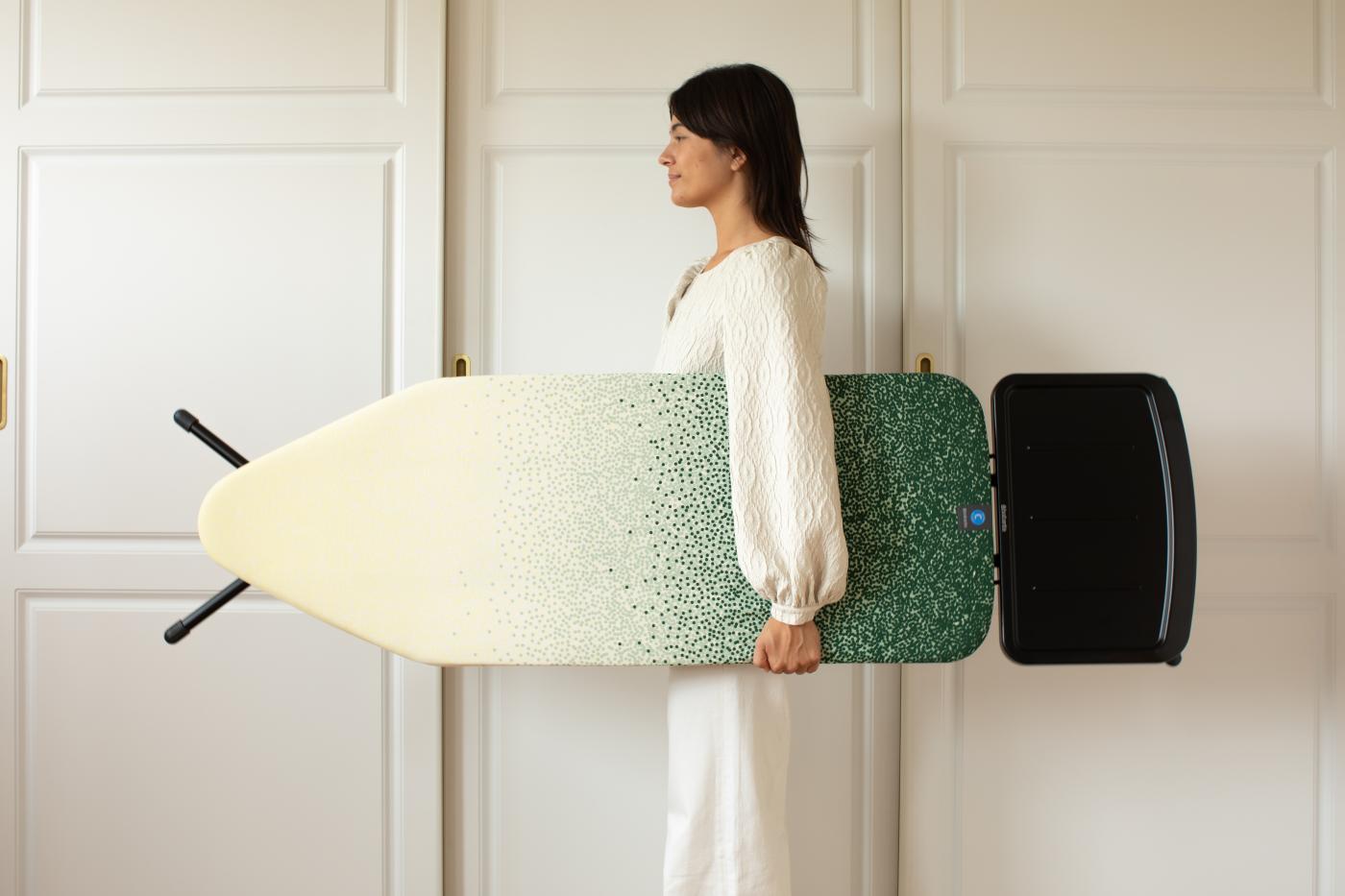
Ironing: for sharp, polished results
An iron is still the go-to for structured pieces and defined creases — shirts, trousers, table linen. It’s great when you want a crisp finish. More good news: ironing burns more than 100 calories an hour. And keeping your laundry basket low means you stretch and bend more — a hidden workout! Avoid shine and burn marks by adjusting the heat and keeping the iron moving.
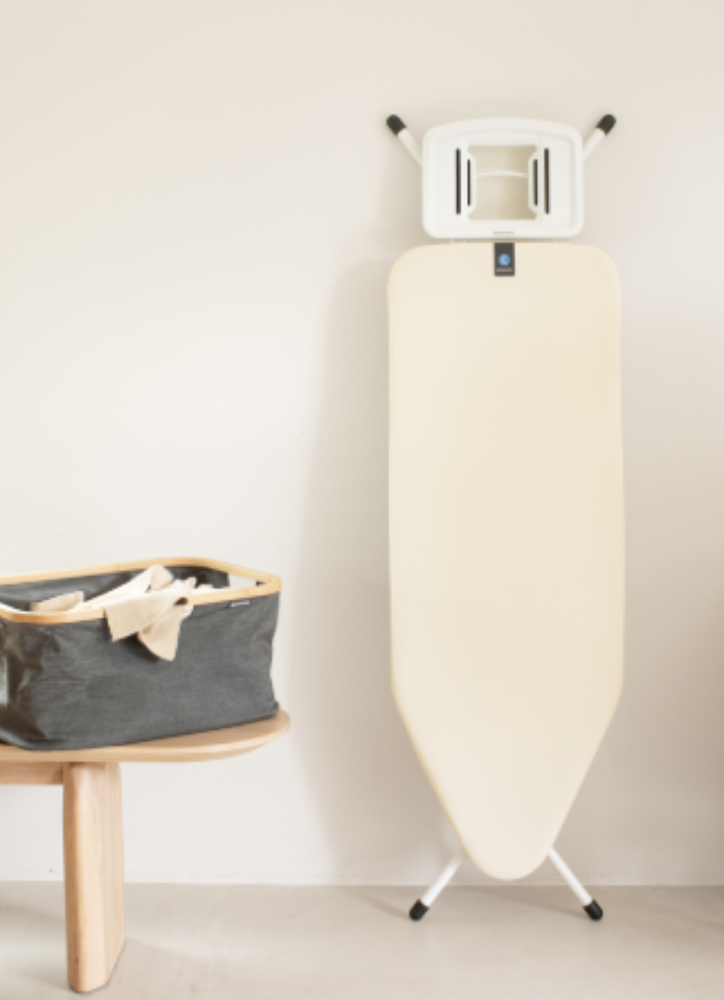
Helpful tips for ironing
Want better results with less effort? A few smart ironing habits can go a long way:
- Start with low-heat items
Begin with synthetics or delicate fabrics. That way, you won’t have to wait for your iron to cool down between items. - Protective cloth
Place a clean cloth between the iron and delicate fabrics like silk or printed t-shirts to avoid damage or shine. - Use a snug-fitting board cover
A tight cover ensures your garments stay smooth and in place while ironing. Looseness creates more creases than it removes. Need the perfect fit? - ironing cover selector tool | Brabantia - Choose the right ironing board
If ironing is part of your weekly routine, a well-designed board makes a big difference — the right board helps you get better, faster results. Look for:
- a steam-permeable cover, to prevent dampness underneath
- a stable surface, so nothing wobbles while pressing
- adjustable height, for comfortable use whether you’re sitting or standing
- enough length and width to support shirts, dresses and larger items
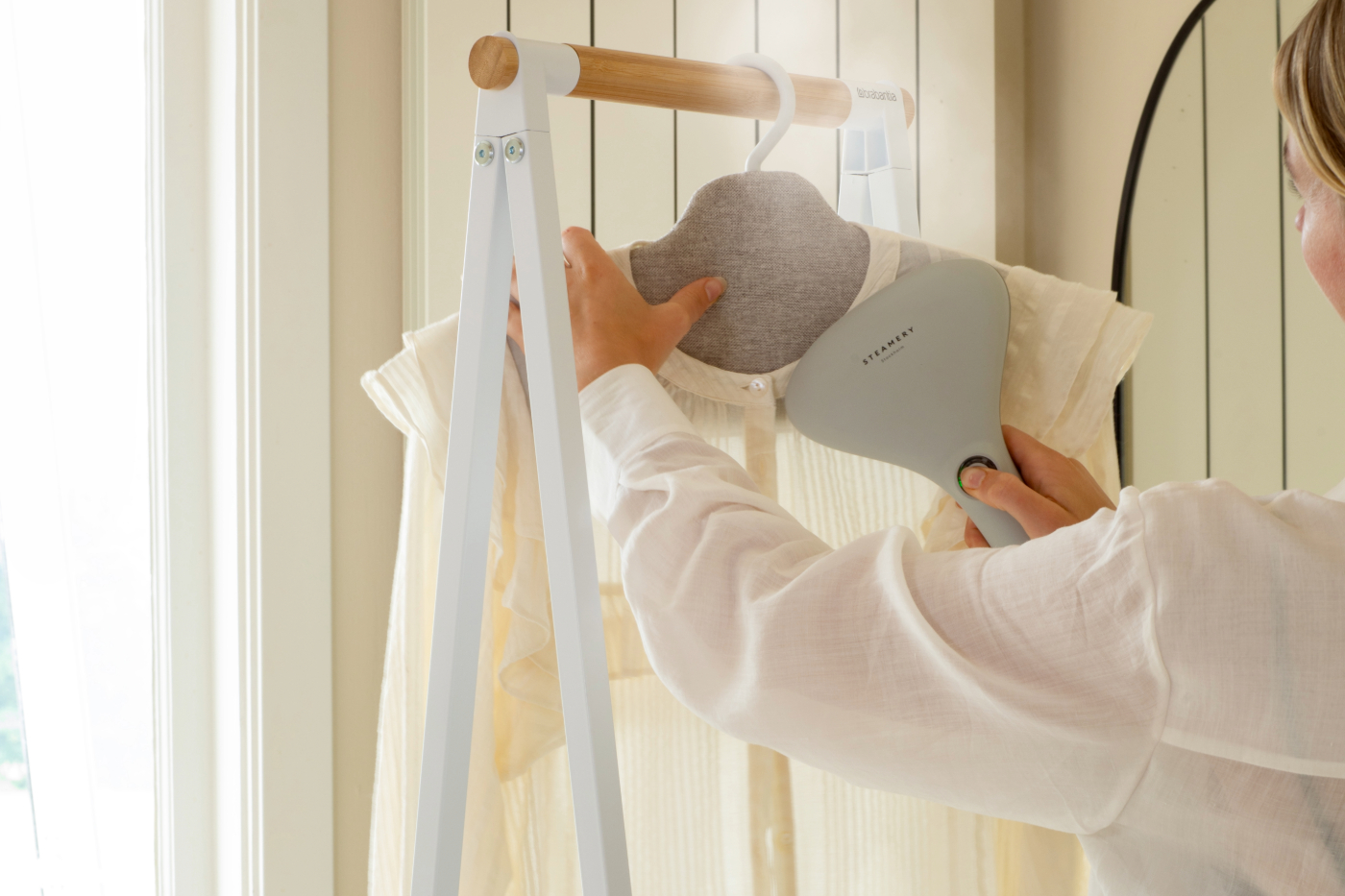
Steaming: light, fast and fabric-friendly
Steamers are ideal for quick refreshes and delicate materials. A lightly creased blouse? A linen dress that’s lost its shape a little? A steamer smooths things out gently, without the risk of shiny marks. On the other hand: it does not work too well on deep creases or thick fabrics. And you can’t make defined creases with it, so trousers or crisp shirts may still need an iron
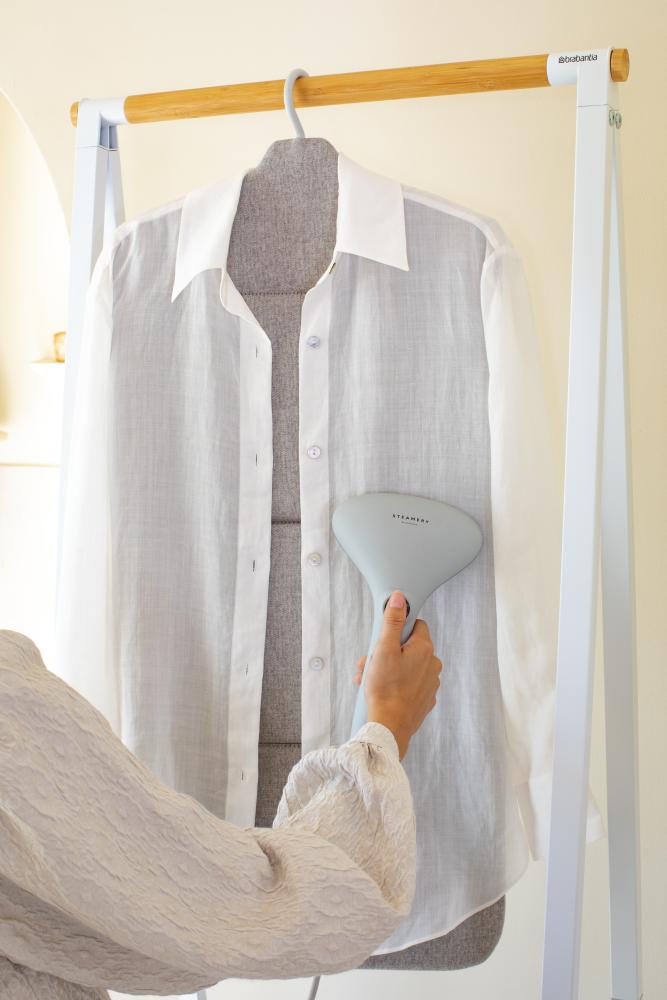
Helpful tips for steaming
Steaming can be quick and easy — especially when done correctly:
- Use distilled or demineralised water
This prevents limescale build-up and avoids water stains from minerals in tap water. - Let it dry before wearing
After steaming, give the garment time to dry and cool to keep its shape. - Know when not to steam
Heavy fabrics like denim, or items that need creases, are better off ironed. - Use a board
Even when steaming, a board can come in handy — especially for tricky garments.
- Use the board as a support behind the fabric, so you can gently press with the steamer
- Hang items off the side or over the top for a more controlled shape
- Place freshly steamed clothes on the board to cool down crease-free - So which one should you use?
It depends on the moment:
- Iron when you want crisp, defined results
- Steam when you’re in a hurry or working with delicate fabrics
- Use both if you want flexibility for different outfits and materials
SMOOTH CLOTHES, YOUR WAY
Whether you’re a loyal ironer, a dedicated steamer, or someone who likes the best of both worlds, the Brabantia Steam & Ironing Board D is made for you. This smart 2-in-1 board lets you switch effortlessly between horizontal ironing and vertical steaming – and gives perfect results any way around. The innovative heat-resistant zone means you can safely park your iron, while the shoulder-shaped end is perfect for blouses, shirts, and trickier fabrics. With its stable surface and easy adjustability, it’s your go-to solution for quick refreshes and polished results alike. So, are you an Ironer, a Steamer… or both?
|
Feature / Use case |
Ironing |
Steaming |
|
Best for |
Sharp creases, structured fabrics |
Delicates, quick refreshes |
|
Time needed |
Slower, more precise |
Faster, less effort |
|
Fabric types |
All fabrics, especially thick ones |
Light to medium fabrics |
|
Crease removal |
Strong, defined |
Gentle, surface-level |
|
Can cause shine? |
Yes, on synthetics if too hot |
No (if used correctly) |
|
Portable? |
Less portable |
Often compact and travel-friendly |
|
Risks |
Burns, shine, scorching |
Water stains, steam burns |
|
Requires surface/board? |
Yes, always |
No, but support helps |
|
Can create creases? |
Yes |
No — cannot shape folds |
|
Maintenance |
Clean soleplate occasionally |
Use distilled water to prevent scale |